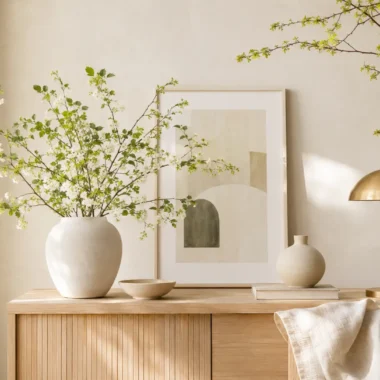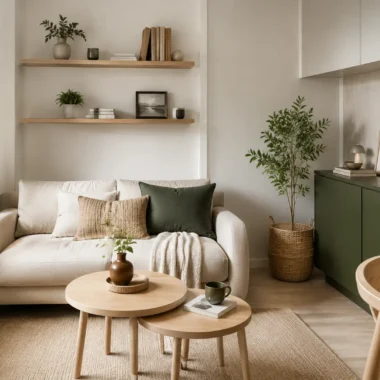
Rooms that feel warm and finished usually have more than color in common: they combine surfaces that invite the eye and hand to move around the space. Learning how to layer textures in interior design helps a neutral room feel rich, gives a colorful room balance and makes everyday furniture look more intentional.
Quick answer: begin with one dominant material, add contrast through soft and hard surfaces, vary the scale of patterns, repeat a few finishes around the room and stop before every surface becomes a statement. Texture works best as a conversation between materials, not a competition.
What texture means in interior design
Texture is the visual or tactile quality of a surface. Linen feels relaxed, velvet feels plush, stone looks solid, glass reflects light and unfinished wood adds natural variation. Even a smooth painted wall has texture when it sits beside woven fabric, brushed metal or a thick rug.
There are two useful categories. Tactile texture is what you can physically feel. Visual texture is what a surface suggests through pattern, grain, shine or shadow. Successful rooms usually combine both.
1. Choose a calm foundation
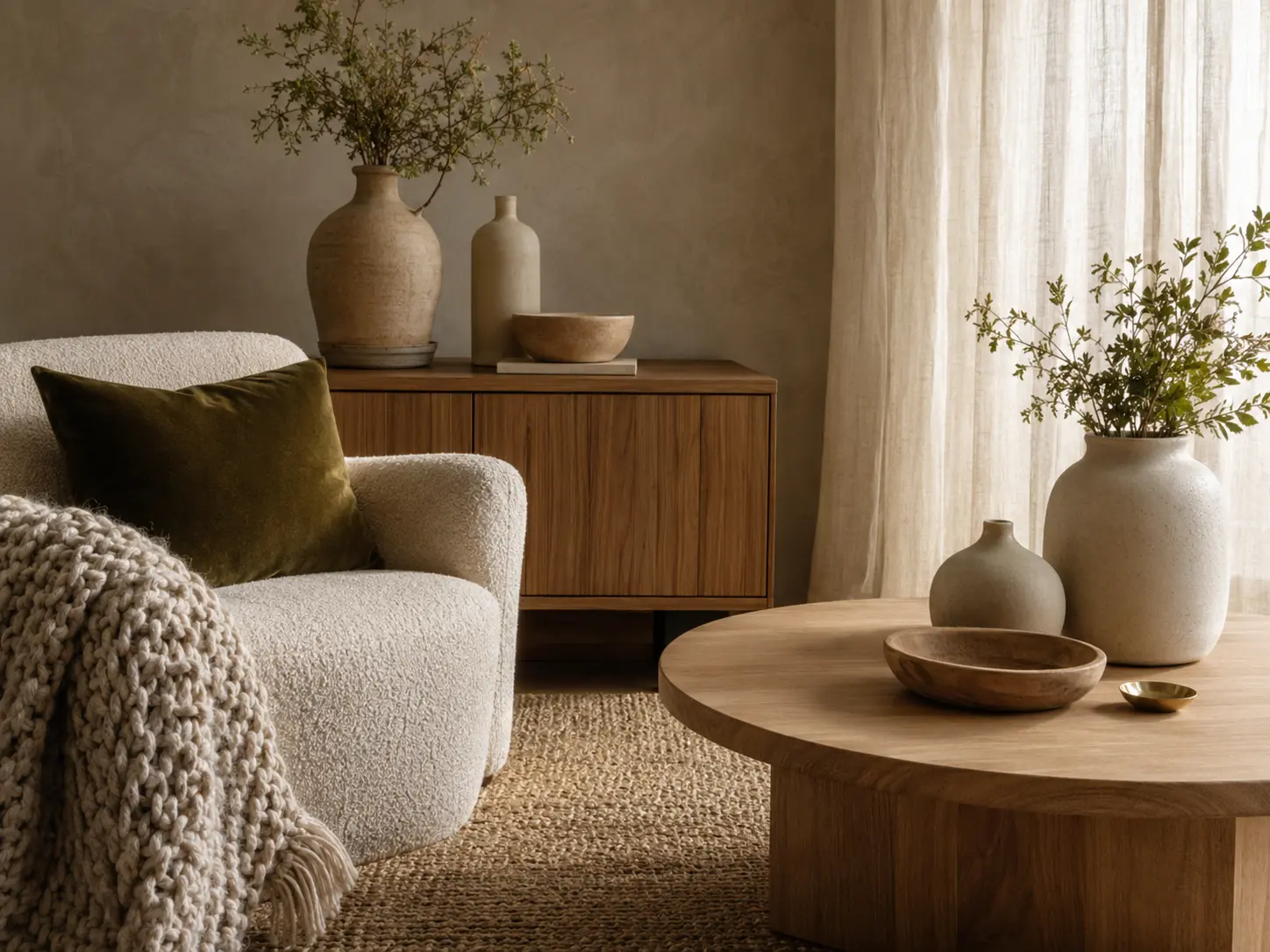
Start with the largest surfaces: flooring, walls, sofa and curtains. They form the background against which smaller textures will be noticed. A calm foundation does not have to be plain, but it should give the room a clear direction. Warm wood floors and an ivory sofa, for example, create an easy base for woven, ceramic and metal accents.
2. Combine soft, hard, matte and reflective finishes
Contrast is the fastest way to make texture visible. Place a chunky throw on a smooth chair, a matte ceramic vase on a polished table or a crisp linen cushion beside a softer boucle fabric. If every finish is equally soft or equally glossy, the room can feel one-dimensional.
A practical formula is to include something soft, something woven, something natural and one element with a little sheen. Ragoba’s home décor collection can help you introduce these layers without replacing the room’s larger pieces.
3. Vary the scale
Texture has scale just like pattern. A broad wood grain reads differently from a fine linen weave; a deep ribbed surface feels stronger than a subtle speckled finish. Mix one larger, more expressive texture with several quieter ones so the room has a focal point and supporting detail.
4. Keep color connected
When you are combining several materials, a limited color family keeps the result cohesive. Layer cream, sand, taupe and walnut for a warm neutral scheme, or repeat olive, clay and brass for an earthier look. Similar colors allow the material differences to become the main story.
If the room already contains bold color, use texture in quieter tones. Natural fibers, clear glass and warm wood can soften saturated walls or artwork without adding another competing hue.
5. Repeat a material at least twice
Repetition makes a layered room feel designed. A brass lamp can connect with a small brass tray. A woven basket can echo the weave of a cushion. The pieces do not need to match exactly; they only need to share enough color or material character to create a visual rhythm.
6. Let lighting reveal the texture
Texture depends on highlights and shadow. Side lighting reveals the grain of wood, the folds of curtains and the surface of a plaster wall better than flat overhead light. Use a floor lamp near a textured chair, a wall light above artwork or a pendant over a dining table to make materials feel more dimensional.
Browse lighting with both function and material in mind. A lamp contributes texture through its shade, base and the quality of light it casts.
7. Layer from floor to eye level
A room feels balanced when texture is distributed rather than concentrated on the sofa. Begin with a rug, move to furniture and cushions, then add curtains, wall art or a sculptural light. This floor-to-wall approach guides the eye around the full space.
Room-by-room texture ideas
Living room
Pair a smooth sofa with woven cushions, a low-pile rug, a wooden table and one reflective accent. Keep frequently touched surfaces comfortable and durable.
Bedroom
Build softness through cotton sheets, a quilt or duvet, a textured throw and an upholstered or wood headboard. Use different fabric weights rather than piling on many patterns.
Dining area
Let wood, ceramic, linen and metal do the work. A simple table setting feels elevated when matte plates, woven napkins and a softly reflective light fixture are combined.
Texture mistakes that make a room feel busy
- Using many statement textures with no quiet background.
- Matching every textile so closely that the room feels flat.
- Concentrating all texture in cushions and ignoring floors, walls and lighting.
- Choosing delicate surfaces where durability is more important.
- Adding texture without repeating any color or material.
The finishing rule: edit before you add
Step back and identify the first three surfaces you notice. If they all demand equal attention, remove or simplify one. If the room feels flat, add a single contrasting material rather than several accessories. Thoughtful texture is about balance, and the right mix can make even simple furniture feel personal, comfortable and complete.