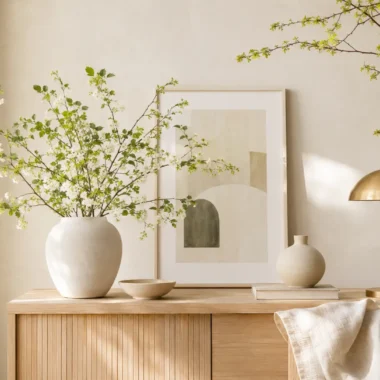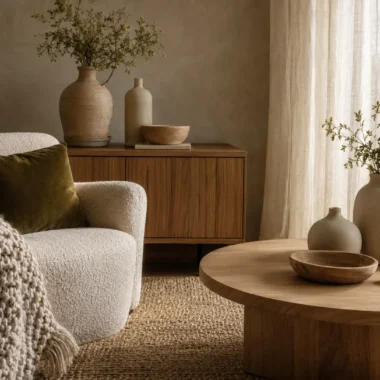
A compact room does not have to feel crowded or compromised. The best small living room ideas focus on proportion, movement and purpose: every piece earns its place, the eye can travel freely, and the room still feels comfortable enough for real life. With a thoughtful plan, even a modest living area can feel brighter, calmer and more generous.
Quick answer: choose furniture that fits the room, protect clear walking paths, use pieces with more than one function, layer lighting and keep the color story controlled. These decisions create more visual space without stripping the room of warmth or personality.
1. Start with the way you actually use the room
Before buying anything, list the room’s real jobs. Is it mainly for conversation, television, reading, working from home or hosting overnight guests? A clear priority prevents you from filling the space with furniture that looks useful but rarely gets used.
Measure the full room, including doors, windows, radiators and the space needed to open drawers. Then map a simple route from the entrance to the main seat. A walkway of roughly 30 to 36 inches feels comfortable in many homes, but the most important rule is that nobody should have to squeeze around a coffee table or chair.
2. Choose furniture with the right visual weight
Small does not always mean miniature. Several tiny pieces can make a room look busy, while one well-proportioned sofa creates a stronger and calmer anchor. Look for narrow arms, a shallower seat and a back height that does not block the view across the room. Explore Ragoba’s furniture collection with measurements in hand, rather than relying on how an item looks in a large product photo.
Rounded corners are especially helpful in tight layouts. An oval or circular coffee table softens movement and reduces the number of hard edges competing for attention.
3. Make one piece do two jobs
Multifunctional furniture is one of the most reliable small-space solutions. A storage ottoman can hold throws and become extra seating. A slim console can act as an entry table, display surface or occasional desk. Nesting tables provide flexible surfaces and disappear when they are not needed.
The key is to avoid complicated pieces that solve a problem you do not have. Choose dual-purpose furniture that supports your daily routine and keeps clutter out of sight. Browse storage and organization for options that add function without adding visual noise.
4. Lift the room off the floor
Furniture with visible legs allows more flooring to remain in view, which can make the room feel lighter. Wall-mounted shelves and lighting also free up valuable surface area. This does not mean everything needs to float; one grounded piece, such as a sofa or rug, can still provide stability while lighter elements create breathing room around it.
5. Build a layered lighting plan
A single ceiling fixture often leaves a compact room feeling flat. Combine ambient light with a focused reading light and a softer accent source. A wall sconce can replace a bulky table lamp, while a pendant draws the eye upward and emphasizes ceiling height.
Warm bulbs generally make living rooms feel inviting, while dimmers help the same space shift from daytime tasks to evening relaxation. See Ragoba’s lighting selection for ways to brighten corners without crowding tables.
6. Use mirrors with intention
A mirror works best when it reflects something worth seeing: a window, a plant, artwork or a well-lit area. Placing one opposite or near a natural light source can distribute brightness deeper into the room. Avoid hanging it where it only doubles visual clutter.
7. Keep the palette connected
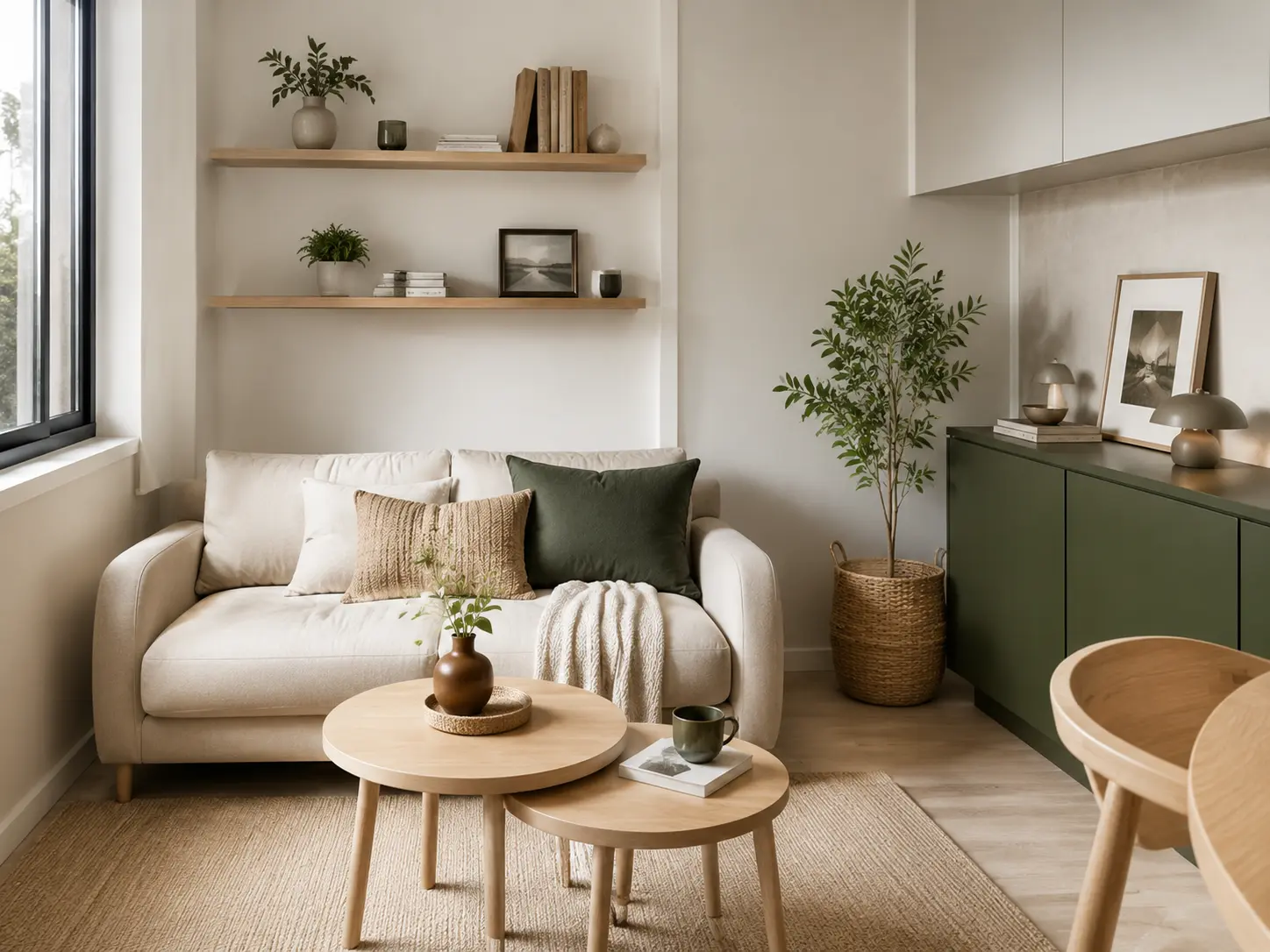
Choose two or three main colors and repeat them in different materials. A warm neutral wall, olive textile and natural wood accent can feel layered without becoming chaotic. This approach does not require an all-white room; darker colors can create depth when they are used consistently and balanced with enough light.
8. Define the seating area with the right rug
A rug that is too small can make the furniture look disconnected. When possible, choose a size that allows at least the front legs of the main seating to rest on it. A simple border, low-contrast pattern or natural texture gives the area definition without visually shrinking it.
9. Use vertical space, but leave pauses
Tall shelving, curtains hung closer to the ceiling and vertical artwork can guide the eye upward. The mistake is filling every inch. Leave some wall area empty so the objects you display can stand out. Negative space is not wasted space; it is what makes a compact room feel edited rather than packed.
Common small living room mistakes to avoid
- Buying furniture before checking the doorway and room measurements.
- Pushing every item against the wall, even when a slightly floated layout would improve conversation.
- Using only one overhead light.
- Choosing too many small decorative objects.
- Ignoring hidden storage and cable management.
- Blocking windows with tall or heavy furniture.
A simple small-space checklist
- Measure first and protect a clear walking route.
- Choose one main anchor piece.
- Add at least one multifunctional item.
- Layer ambient, task and accent lighting.
- Repeat a limited palette across different textures.
- Remove one unnecessary object before adding another.
The most effective small living room is not the one with the least furniture. It is the one where scale, storage, light and comfort work together. Start with your daily needs, make each choice deliberate, and browse the Ragoba shop for pieces that help your space live beautifully.